How many nights you spend in Amboseli matters more than the question usually gets. Stay too short and you miss the mountain on the one clear morning, or you squeeze three days of experience into a rushed blur. Stay longer than you need and you are spending budget that could go toward another destination.
The straightforward answer:
- 1 night is possible but compressed. It works if time is very limited.
- 2 nights is the practical sweet spot for most travellers.
- 3 nights is better for photographers, families, honeymooners, and anyone who wants a more relaxed rhythm.
What makes the right choice depends on why you are going.
Quick Comparison Table
| Stay Length | Best For | Main Trade-Off |
|---|---|---|
| 1 night | Very tight schedules, quick sample visit | Compressed and sensitive to weather or unlucky timing |
| 2 nights | First-timers, balanced value, most itineraries | Still shorter than ideal for dedicated photographers |
| 3 nights | Photographers, families, relaxed pace, mountain priority | Higher cost and more itinerary space required |
Why One Night Can Still Work
A one-night stay in Amboseli can produce meaningful experiences if expectations are calibrated honestly. One night typically gives you one afternoon wildlife window on arrival and one early-morning game drive before departure. That can be enough to see elephants, spot Kilimanjaro if the morning is clear, and get a genuine sense of the park.
The problem is that there is no recovery space. If the first game drive is quiet, or if cloud covers the mountain on the only dawn you have, there is nothing to fall back on. Weather in Amboseli can be unpredictable, particularly around the mountain. One clear morning is not guaranteed.
This is why a one-night Amboseli visit should be framed honestly as a sample, not a full experience. It can deliver something worthwhile, but it does not give the park room to breathe.
Why Two Nights Is the Sweet Spot
Two nights changes the texture of the visit substantially. You gain a second dawn opportunity for Kilimanjaro, more than one meaningful wildlife window across different times of day, and enough time to settle into the camp and actually enjoy being there rather than constantly preparing for the next transfer.
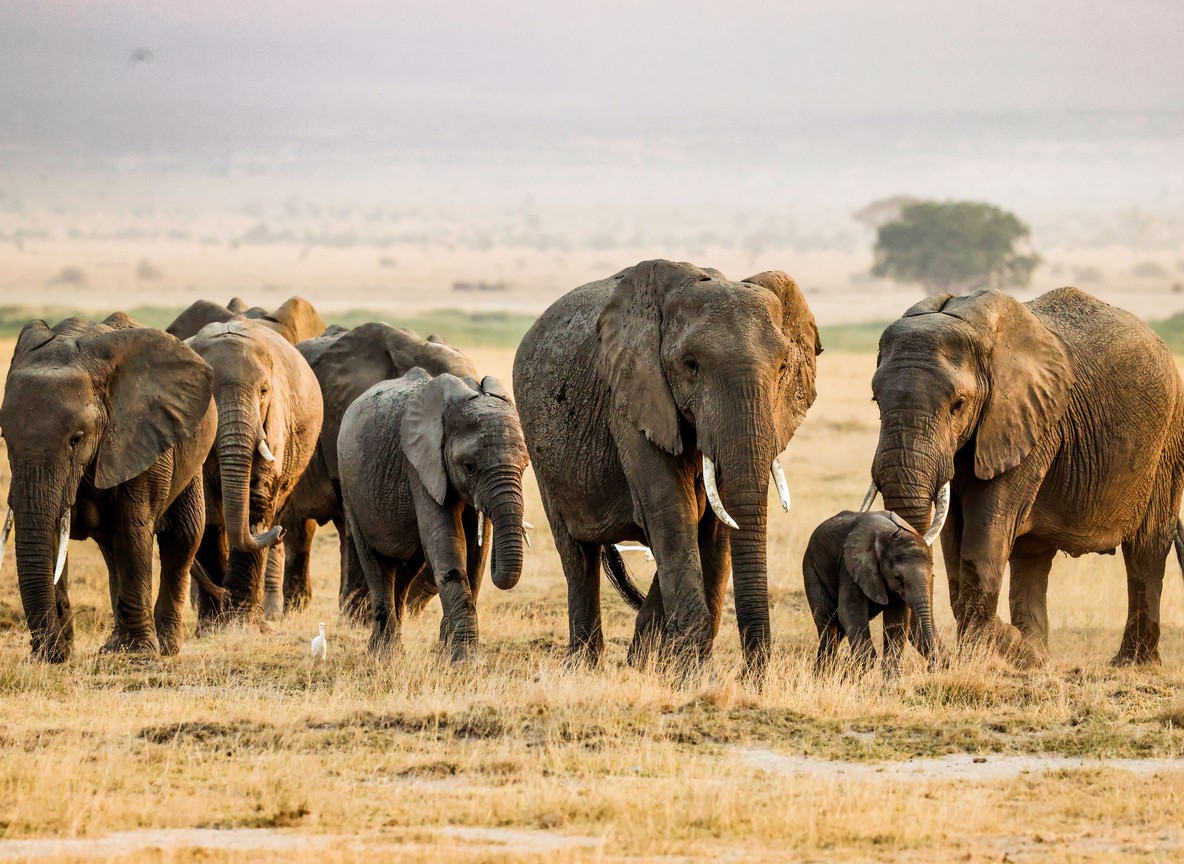
For first-time visitors to Amboseli, two nights usually allows the park to feel like a destination rather than a stopover. The elephant herds here can be watched over multiple drives, which builds understanding of herd dynamics and movement patterns that a single visit cannot. The swamp and open plains offer very different game-viewing conditions, and two nights gives you a chance to experience both.
Two nights also sits comfortably within a multi-park Kenya itinerary. It is enough to do Amboseli proper justice without consuming so much time that other destinations are squeezed.
When Three Nights Makes the Difference
Three nights is not essential for every traveller, but for certain groups it is a meaningful upgrade.
Photographers particularly benefit. Kilimanjaro visibility is highest at dawn and most reliable when skies are completely clear, which does not happen every morning. Three nights means three to four dawn opportunities with the mountain, far better odds for the iconic shot. The elephant herds in different light conditions, the swamp at golden hour, the dust and haze at midday: these take time to photograph properly.
Families generally do better with three nights because children benefit from a steadier pace, arrival and departure are less compressed, and there is margin for rest and recovery between drives.
Honeymooners and couples who want the stay to feel genuinely leisurely rather than purposeful will find two nights can still feel brisk. Three nights allows for morning drives that are not immediately followed by packing.
Repeat safari travellers who have already covered the main parks and are returning to Amboseli for depth rather than novelty will likely find three nights more rewarding than two.
How Stay Length Affects Kilimanjaro Chances
This is one of the strongest arguments for not rushing Amboseli. The mountain is most visible at dawn before the equatorial heat builds cloud cover, and clear mornings are not guaranteed. More nights mean more dawn attempts.
- 1 night: One main mountain attempt.
- 2 nights: At least two strong dawn opportunities.
- 3 nights: The flexibility to wait out a cloudy morning and still catch the mountain later in the trip.
If Kilimanjaro is a primary reason for visiting Amboseli, two nights is the minimum worth considering. One night puts too much pressure on a single morning.
How Stay Length Affects Elephant Viewing
Amboseli’s reputation is built on its elephant herds, and even a one-night stay usually produces elephant sightings. The quality of that experience, however, scales with time.
One night shows you elephants. Two nights allows you to see different herds in different parts of the ecosystem, observe behaviour changes at different times of day, and spend time simply watching rather than always moving toward the next sighting. Three nights gives you the space to observe swamp behaviour versus open plains movement, to learn how the herds track water during different parts of the day, and to appreciate the scale of the elephant population at a pace that is not rushed.
Travellers who specifically chose Amboseli for elephants will get more from two or three nights than from one.
Stay Length for Multi-Park Itineraries
When Amboseli is one stop in a broader Kenya trip, the allocation depends on its role:
- If Amboseli is an equal partner alongside the Masai Mara, two nights for each is a reasonable split.
- If Amboseli is the emotional centrepiece of the trip, three nights makes sense and the Masai Mara portion can be adjusted accordingly.
- If Amboseli is a brief add-on at the end of a longer safari, one night can work as a final morning experience before the return journey.
The mistake to avoid is treating every park as equally important and distributing nights evenly regardless of personal priorities. Decide which destination matters most for your specific goals, then weight the nights accordingly.
Budget Considerations
The instinct to choose one night on a tighter budget is understandable, but the value calculation is worth running properly. A one-night stay front-loads a significant portion of total trip cost on transfers and logistics. Add a second night and the per-night cost of those fixed transfer expenses is halved, while the wildlife experience roughly doubles.
Two nights often represents better value per experience than one, even if the headline cost is higher. The key is comparing the total trip output, not just the accommodation rate.
The Short Answer
For most travellers, two nights in Amboseli is the right call. It is long enough to make the park feel substantial, short enough to fit cleanly into a Kenya itinerary with other parks, and flexible enough to give you at least two strong dawn opportunities for both wildlife and Kilimanjaro.
Photographers, families, and anyone who specifically wants to slow down should lean toward three nights. One night works only when time genuinely cannot stretch further.
Explorer Notes
- Amboseli is approximately a four-hour drive from Nairobi or a 45-minute flight to Amboseli airstrip. Factor transfer time into how useful each day actually is.
- The park operates on standard Kenya National Park game-drive timing. Very early morning and late afternoon drives are most productive.
- Camp selection within Amboseli matters. Properties inside or very close to the park boundary reduce dead transfer time between accommodation and the wildlife zones.
- The short rains (November) bring lush green conditions and excellent predator activity around newborn prey. This is an underappreciated Amboseli season that suits all stay lengths well.
What to Read Next
- Best camps and lodges in Amboseli: comparing location, facilities, and wildlife access
- Amboseli versus Tsavo: how to choose between Kenya’s southern parks
- The best time to visit Amboseli by month: weather, wildlife, and crowds
If this guide has you ready to travel, a safari specialist can handle the route, camps, and logistics end to end.
Want to Book a Tour With Us?Further reading
More safari planning resources
- Map of Amboseli from Valley Safaris
- Amboseli destination guide on FindMySafari
- Nairobi to Maasai Mara route guide from Valley Safaris
- Compare Kenya safari packages on FindMySafari
Related guides: 2 Nights vs 3 Nights in Amboseli: How Long Should You Actually Stay?, Amboseli 1 Night vs 2 Nights: Which Trip Length Actually Makes Sense, Best Area to Stay in Amboseli: Zone-by-Zone Guide.